Norway, Switzerland, Iceland and Liechtenstein sign free trade agreement with Vietnam yesterday: immediate elimination of duties on Vietnamese products and zero tariffs on Norwegian salmon
On 18 October 2026, Vietnam and the four EFTA countries signed a free trade agreement in Hanoi after 14 years of negotiations. The European countries will immediately remove customs duties on Vietnamese industrial products and seafood, while Vietnam will progressively eliminate its tariffs on 98% of Norwegian exports over seven years. For importers and exporters worldwide trading with these markets, this signature transforms customs access in a strategic corridor worth €4.8 billion in bilateral trade.
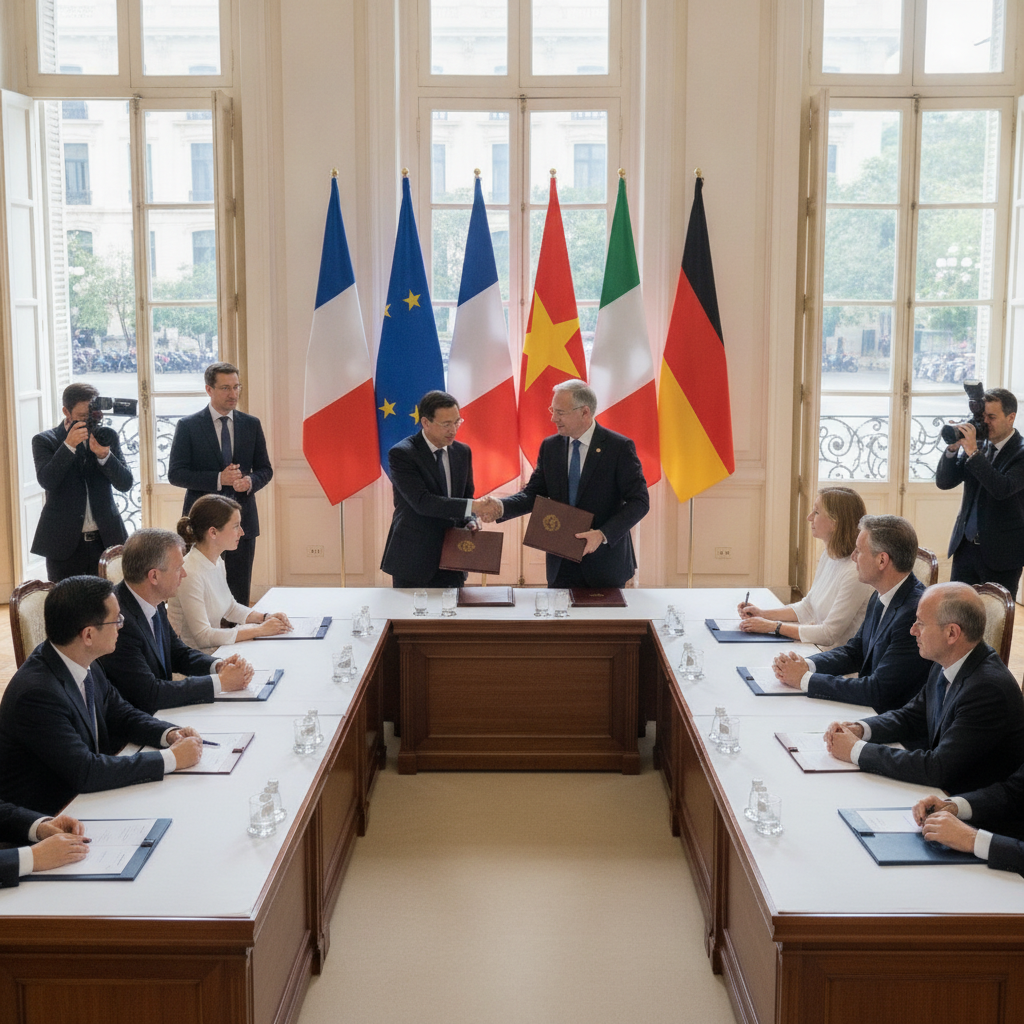
Official signature in Hanoi on 18 October 2026: a free trade agreement after 14 years of negotiations
On 18 October 2026, Vietnam and the European Free Trade Association (EFTA) — Norway, Switzerland, Iceland and Liechtenstein — signed a free trade agreement in Hanoi in the presence of Vietnamese President To Lam and representatives of EFTA governments. Negotiations, initially launched in July 2012, had slowed after 2018 before being relaunched in September 2025 and concluded after 21 rounds of talks in July 2026.

According to the Vietnamese government, the agreement demonstrates the parties' commitment to "strengthening the rules-based trading system amid global economic volatility" and should help Vietnam "diversify its import and export markets" and "integrate more deeply into global value chains". This signature comes as negotiations, long stalled, were relaunched last year against a backdrop of global trade tensions linked to US tariffs.
Practical context for importers: If you buy Vietnamese products (textiles, footwear, seafood, electronic components) for resale in Switzerland, Norway, Iceland or Liechtenstein, or if you export machinery, pharmaceuticals or foodstuffs from these countries to Vietnam, this agreement immediately changes your customs costs. The key is to understand who benefits from what, and from when.
Immediate elimination of customs duties by EFTA: duty-free access from entry into force for Vietnamese products
The EFTA countries — Norway, Switzerland, Iceland and Liechtenstein — will eliminate customs duties on industrial products and seafood from Vietnam immediately upon the agreement's entry into force. Import tariffs on industrial products and seafood originating in Vietnam will be removed immediately upon implementation.
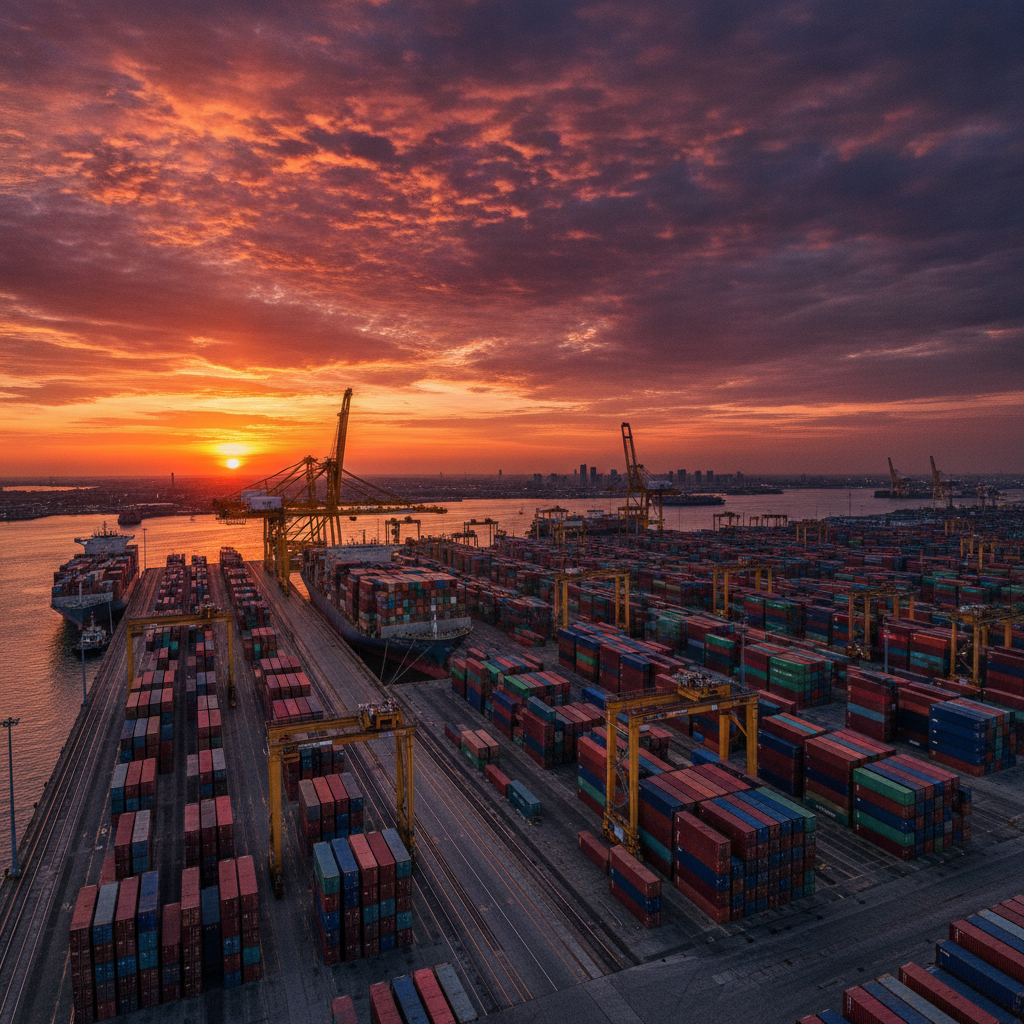
Vietnam's main exports to EFTA markets include seafood, footwear, textiles and clothing, machinery and equipment, electronics and components, while imports from EFTA consist mainly of machinery, industrial equipment, chemicals, pharmaceuticals and production materials.
For a Swiss or Norwegian importer buying Vietnamese footwear, textiles or electronic components: as soon as the agreement enters into force, these products will enter entirely duty-free, with no transition period. This immediately improves your competitiveness against suppliers from other third countries.
Practical advice: To benefit from these zero rates, you will need to obtain a preferential certificate of origin from your Vietnamese suppliers, compliant with the agreement's rules of origin. Start discussing with your suppliers now so they understand the documentation and traceability requirements that will apply from entry into force.
Progressive removal by Vietnam: 98% of Norwegian exports duty-free within seven years, 11 years for industrial products
About half of Norwegian exports to Vietnam will be exempt from customs duties from the agreement's entry into force, and more than 98% will be duty-free within seven years. Vietnam, for its part, will progressively reduce or eliminate tariffs on products from EFTA countries over a transition period of up to 11 years for most industrial goods.
Certain agricultural products — notably cheese, coffee and chocolate — will benefit from duty-free access to Vietnam according to a gradual transition schedule. This asymmetry reflects differences in economic development: the EFTA countries, as advanced economies, open up immediately, while Vietnam, an emerging economy undergoing rapid growth, adjusts progressively.
Bilateral trade between Vietnam and the EFTA bloc has grown steadily, reaching around €4.8 billion in 2025.
Impact for European exporters: If you sell industrial machinery, production equipment, pharmaceuticals or processed foodstuffs from Norway, Switzerland, Iceland or Liechtenstein to Vietnam, check the tariff dismantling schedule specific to your product in the agreement's annex. Some products will be exempt immediately, others in 3, 7 or 11 years.
Norwegian salmon and mackerel: immediate removal of 15% tariffs for salmon, progressive elimination over three years for mackerel
Vietnam currently imposes tariffs of up to 15% on Norwegian salmon and mackerel. From the agreement's entry into force, salmon will be exportable duty-free, while tariffs on mackerel will be removed progressively over three years. Previously, Vietnamese importers had to pay a 10% tariff on whole Norwegian fish and a 15% rate on fillets, placing Norway at a disadvantage compared with competing suppliers.
According to the Norwegian government, seafood accounted for 58% of the NOK 6.2 billion in goods and services the country exported to Vietnam in 2025. Norway exported 66,000 metric tonnes of seafood products to Vietnam last year, worth NOK 3.2 billion, with salmon accounting for 21,300 tonnes.
For global seafood exporters: if you buy Norwegian salmon for processing or re-export to Asia, Vietnam immediately becomes a more attractive market once the agreement is activated. Removal of the 15% tariff improves the competitiveness of Norwegian salmon against Chilean or Scottish products that continue to pay full duties.
According to Norwegian Minister of Fisheries Marianne Sivertsen Næss, "the agreement will give Norwegian seafood exporters conditions equivalent to those enjoyed by major competitors and create opportunities for increased seafood exports to Vietnam".
Services, investment and technological cooperation: opening markets beyond goods trade
The agreement is a modern and comprehensive agreement covering numerous areas, including trade in goods, trade in services, rules of origin, sanitary and phytosanitary measures, technical barriers to trade, investment, intellectual property rights, trade remedies, government procurement, trade and sustainable development, small and medium-sized enterprises, as well as cooperation and capacity-building.
The services chapter covers financial, transport, business, telecommunications, maritime and professional services, with commitments to improve market access, as well as telecommunications, international maritime transport and related services, movement of natural persons, business services, transport, domestic regulation, payments, transfers and licensing procedures.
As at 31 December 2025, Switzerland had 234 investment projects in Vietnam with total registered capital exceeding $2.4 billion, while Norway had 62 projects worth more than $201 million. Many major EFTA companies and investors have established themselves in Vietnam and operate successfully in sectors such as manufacturing, food, pharmaceuticals, energy and technology.
Recommendation for services companies: If your company offers financial, consulting, engineering, telecommunications or maritime transport services, examine the services chapter of the agreement to identify new market access rights in Vietnam. Vietnam's commitments in these sectors may open up business opportunities that goods tariffs alone do not reflect.
Timeline for entry into force and next steps: ratification expected in the coming months
The immediate outlook for 2026 centres on the formal signing of the EFTA–Vietnam free trade agreement, expected in autumn or the fourth quarter of 2026. Attention will then turn to the ratification processes within each EFTA member state and Vietnam, which will determine the agreement's entry into force. With signature having taken place on 18 October, ratification should follow in the coming months.
The agreement was expected to be signed this autumn. Now that signature is effective, each country must go through its internal parliamentary ratification process. For Norway and Switzerland, this may take several months. For Vietnam, the National Assembly will also need to approve the text.
Immediate action for importers and exporters: Even though the agreement is not yet in force, you can already:
- Identify the products in your portfolio that will benefit from immediate or progressive tariff elimination
- Review the rules of origin specific to each product category to determine whether your goods are eligible
- Train your customs teams and suppliers on the new origin certification requirements
- Recalculate your import or export costs to anticipate the financial impact from entry into force
- Revise your sourcing strategies to take advantage of the new preferential trade corridors
The EFTA–Vietnam agreement transforms the customs equation for a €4.8 billion trade corridor. Companies preparing now will be the first to benefit once it enters into force.
Sources and references
- Norwegian Government - Free trade agreement with Viet Nam signed (18 October 2026)
- Malay Mail - Vietnam signs free trade deal with four European nations (18 October 2026)
- The News - Vietnam signs free trade agreement with EFTA nations (18 October 2026)
- Vietnam Plus - Vietnam, EFTA sign free trade agreement after 14 years of negotiations (18 October 2026)
- Vietnam Briefing - EFTA–Vietnam FTA: Business Impact, Market Access, and Rules of Origin
- Norwegian Government - EFTA and Vietnam conclude free trade agreement (2 July 2026)
- SeafoodSource - Norway expects trade pact breakthrough to boost seafood exports to Vietnam