Mexico: 50% tariff on Chinese cars confirmed to stay, amid USMCA/T-MEC renegotiation
On 20 October 2026, Mexico's Ministry of Economy confirmed to car dealers that the 50% tariff on Chinese vehicles will remain in force, despite fears of losing Chinese industrial investment. This confirmation comes as Mexico simultaneously negotiates with Washington a reduction of its own US tariff from 25% to 15% on vehicles manufactured in Mexico, as part of the USMCA/T-MEC annual review.

Mexico decides: the anti-China tariff on automobiles stays in place
On 20 October 2026, Mexico's Ministry of Economy put an end to speculation at the forum held by AMDA, the country's association of car dealers. Carlos Castillo, head of the ministry's productive development unit, stated that the tariff measures must be maintained as they form part of a broader industrial policy aimed at protecting local production and employment.

On Tuesday 20 October 2026, the Ministry of Economy told AMDA that the tariff measures must be maintained, while a consultant present at the same forum warned of a possible loss of Chinese industrial investment. For importers hoping for a swift easing, the message is clear: the tariff wall remains standing.
In practical terms, if you import vehicles manufactured in China (including electric vehicles) into Mexico, the 50% surcharge continues to apply on top of normal customs duties, with no review date announced.
Reminder: a 50% tariff in force since 1 January 2026
This tariff is not new: it stems from a law passed by the Mexican Senate on 10 December 2025. The Mexican Senate approved the law on 10 December 2025 by 76 votes to 5, with 35 abstentions, following its adoption by the lower house, and it entered into force on 1 January 2026, raising tariffs from 5% to 50% on 1,463 tariff lines, affecting Chinese products and those of other countries without a trade agreement with Mexico.
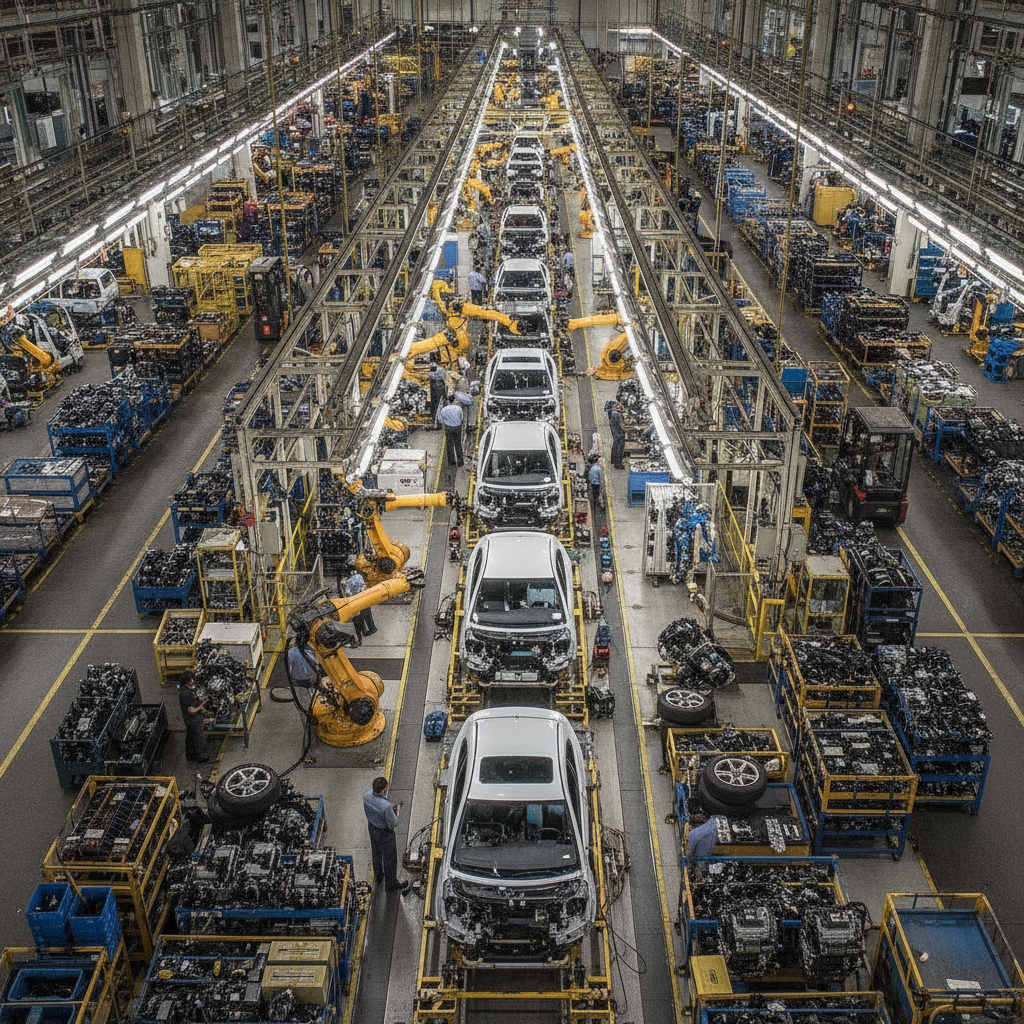
The measure primarily targets the automotive sector: Mexico has charged a 50% tariff on finished cars from countries without a trade agreement, including China, since 1 January 2026, with an exemption for engines under 1.0 litre.
Without a trade agreement with Mexico, a Chinese vehicle pays 50% customs duty on entry since 1 January 2026 — a measure that Mexican authorities have just confirmed they intend to keep in place.
A targeted exemption on spare parts, reserved for already established plants
Another recent development worth noting: on 13 October 2026, the Mexican government published a decree reducing costs... but only for manufacturers already established on its soil.
Mexico has removed its 10% tariff on automotive assembly parts for five years, effective from Wednesday 14 October, via a decree by President Claudia Sheinbaum aimed at attracting production lines for vehicles currently imported fully built, published in the Official Journal on Tuesday 13 October and signed on 9 October.
But care should be taken not to misread this: this exemption does not benefit new entrants. The Ministry of Economy clarified on 16 October that the measure applies only to companies that already have production facilities in Mexico, following questions from analysts about the risk of opening the door to Chinese brands or new arrivals.
In short, if you are a supplier of spare parts (semi-knocked-down kits, assembly components) exporting to Mexico, first check whether your end customer actually has a bonded warehouse and an approved production facility in Mexico: without this, the zero rate does not apply to you.
Against this backdrop: Mexico negotiates its own tariff reduction with Washington
This firm stance towards China is also explained by a parallel balance of power with the United States. Mexico is defending this tariff wall while at the same time asking Washington for a reciprocal gesture on its own car exports.
Mexico is asking Washington to reduce its Section 232 tariff from 25% to 15% on vehicles manufactured in Mexico, while defending its own 50% wall against cars from countries without a trade agreement — both matters converging in the review of the USMCA (the North American free trade agreement, also known as T-MEC).
Negotiations are progressing, according to information cross-checked by several specialist media outlets: under the terms currently being negotiated, Washington would lower its tariff on Mexican light vehicles from 25% to 15%, a full rate that applies only to non-US content, bringing the effective rate to between 10% and 12% according to Mexican estimates.
Mexico City is nonetheless seeking a better deal than the one already granted to its Canadian neighbour, where Washington offered Ottawa a nominal rate of 15%, which could fall to around 7% after applying the maximum regional content discount.
For a US importer of vehicles assembled in Mexico, this means a tariff reduction could arrive before the end of the year — but nothing has been signed, and the timing of the fourth negotiating round remains uncertain.
What this actually changes for supply chains
Ten months after the tariff came into force, the effects on the ground are mixed. Some manufacturers are already circumventing the barrier by making use of rules of origin.
- Circumvention via third countries: Hyundai has shifted its supply chain for its Creta SUV destined for Mexico, from Indonesia to Vietnam, with units made in Vietnam starting to arrive in August — Vietnam not being subject to the 50% surcharge.
- Record market despite the tariff: Mexico sold 1,144,002 new light vehicles between January and September 2026, up 5% and a record for this period.
- Anticipated slowdown: the president of the AMDA dealers' association anticipates a slowdown in growth over the final months of 2026, as Chinese companies can now pass the 50% tariff on to buyers.
- Industrial investment at stake: imports of Chinese cars fell by 31.1% to 158,571 units in the first half of 2026, while a consultant estimates planned industrial investment by Chinese manufacturers abroad at 45 billion dollars over ten years — an amount Mexico risks seeing go to other countries.
Our recommendation: if you export vehicles or parts to Mexico, precisely document the actual country of origin (not just the brand) of each component. The logic of circumvention via third countries such as Vietnam works as long as rules of origin are not tightened — but there is no guarantee this window will remain open if Mexico City decides to extend its controls.
Sources and references
- Mexico Keeps 50% Chinese Car Tariff as Plant Fears Grow - Rio Times
- Mexico's 50% Car Tariff Prompts Rerouting - Rio Times
- Mexico Waives Tariff on Car Assembly Parts - Rio Times
- Mexico limits tariffs break to established local carmakers - Reuters via Investing.com
- Mexico Nears US Deal to Cut Auto, Steel and Aluminum Tariffs - Mexico Business News